


In today’s hospitality industry, online reviews are no longer optional — they are one of the strongest drivers of bookings, pricing power, and long-term revenue.
Before clicking “Book,” most travelers carefully read reviews. Industry data shows that over 80% of travelers rely on online reviews when choosing a hotel, and nearly half will avoid properties with weak or missing feedback. On platforms like Booking.com, guest ratings directly affect not only visibility in search results, but also perceived trustworthiness and value.
Even more importantly, research consistently shows that negative reviews have a stronger impact on booking decisions than positive ones. One uncomfortable detail mentioned by a guest can outweigh dozens of neutral comments. In practice, a single bad review can cost far more than most hoteliers expect.
The Real Financial Impact of Hotel Ratings
Multiple hospitality studies confirm a clear relationship between ratings and revenue. On average, a one-star increase in online rating can raise hotel revenue by approximately 3–4%, especially for properties with a substantial number of reviews.
For a mid-size hotel, this translates into tens of thousands of dollars per year — without adding new rooms or raising prices. Conversely, a negative review that highlights discomfort, missing amenities, or poor-quality details can quickly reduce conversion rates, pushing potential guests toward competitors with similar pricing but higher perceived care.
Georgia’s Growing Tourism Market and Rising Competition
Georgia is an increasingly popular destination for international travelers. With millions of visitors arriving each year, cities like Tbilisi, Batumi, and mountain regions are experiencing rapid growth in accommodation supply. As competition increases, online reputation becomes a decisive factor.
Travelers comparing similar hotels often make their final decision based on rating differences as small as 0.3–0.5 points. In this environment, details that influence guest comfort — especially those frequently mentioned in reviews — play a critical role in revenue performance.
Why Guests Talk About Amenities More Than You Think.
Interestingly, guests rarely complain about luxury furniture — but they often comment on basic comfort items. Reviews repeatedly mention:
uncomfortable or low-quality slippers
missing personal care items
cheap or environmentally unfriendly amenities
lack of attention to small but practical needs
This happens because amenities shape emotional perception. Guests may forget the wall color, but they remember how the room felt.
Research in hospitality psychology shows that functional comfort details strongly influence overall satisfaction and willingness to recommend a hotel. These details signal care, professionalism, and respect for the guest.
Eco-Friendly Amenities: Comfort Meets Values.
Modern travelers are not only comfort-driven — they are increasingly value-driven. Sustainability is no longer a niche concern. Eco-friendly choices influence brand perception, especially among international and younger guests.
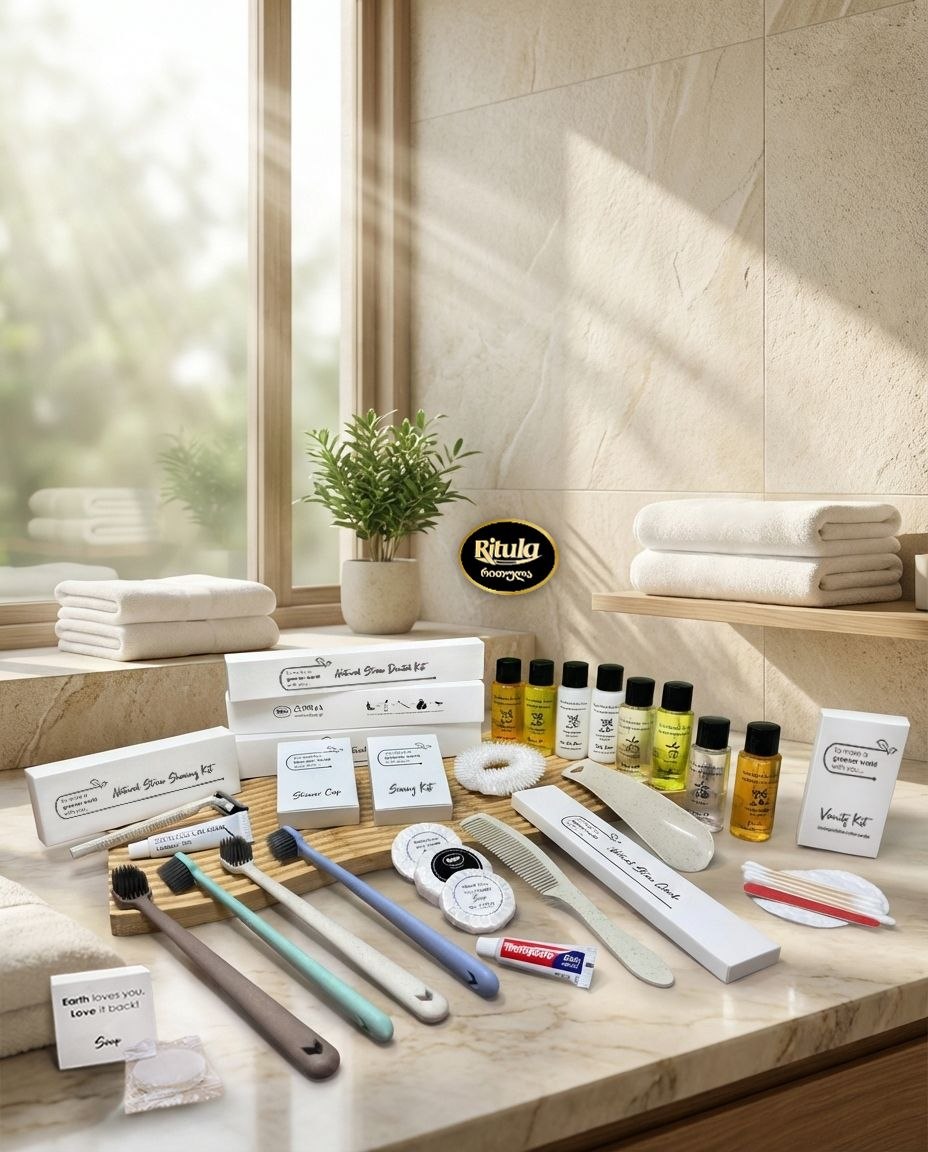
High-quality eco hygiene sets, made from natural materials such as:
straw-based or bamboo toothbrushes
wooden or straw combs,
bamboo or biodegradable made from straw razors
hygiene kits with wooden cotton swabs
send a clear message: this hotel cares — about guests and about the environment.
Hotels that provide sustainable alternatives often receive positive mentions specifically praising environmental responsibility. These comments improve emotional tone in reviews and increase trust among future guests.
The Overlooked Detail: Shower Caps and Guest Satisfaction
One of the most underestimated amenities in hotel rooms is the shower cap.
Many hotels choose to eliminate shower caps to reduce costs, assuming guests don’t notice. In reality, shower caps are widely expected in mid-range and business hotels, and their absence is frequently mentioned in neutral or negative feedback — especially by:
business travelers
guests with long or styled hair
guests staying multiple nights
Industry feedback analysis shows that hotels in the 3–4 star segment are far more likely to receive positive cleanliness and comfort scores when basic hygiene items (including shower caps) are provided. While guests rarely praise a shower cap directly, its absence creates irritation — and irritation is far more likely to appear in a review than satisfaction.
In short: having a shower cap doesn’t impress, but not having one disappoints.
Connecting the Dots: Amenities → Reviews → Revenue
When guests feel that everything they might reasonably need is already prepared for them, they experience effortless comfort. That comfort translates into:
higher review scores
more detailed positive comments
increased likelihood of return visits
better booking conversion rates
A hotel with a 9.0+ rating consistently outperforms a similar hotel rated 7.5–8.0, even at higher prices, because travelers trust peer experiences more than promotional descriptions.
Improving reputation does not always require renovation. Often, it requires better everyday choices.
How Ritula Supports Better Guest Experiences
This is where Ritula supports hotels that aim to improve ratings through thoughtful details rather than excessive spending.
Ritula focuses on:
comfortable, well-fitting hotel slippers that immediately improve the sense of rest and relaxation
Eco-friendly dental and Vanity kits made from natural straw, bamboo, and wood
complete hygiene sets, including wooden cotton swabs and biodegradable materials
practical essentials like shower caps, ensuring no guest feels overlooked
These products are not luxury extras — they are rating-protecting tools.
Final Thought: Small Choices, Measurable Results
In hospitality, guests judge the whole experience through small moments. A soft slipper, a natural toothbrush, or a complete hygiene kit may seem minor — but together, they shape perception.
Each avoided negative review protects revenue.
Each positive mention strengthens trust.
In a competitive tourism market like Georgia, attention to everyday details is no longer optional — it is a strategic investment.